Disney Princesses That Have a Psychological Disorder
Disney Princess and Mental Disorders
Snow White - Obsessive-Compulsive Disorder (OCD)
- Constant, irrational worry about dirt, germs, or contamination.
- Excessive concern with order, arrangement, or symmetry.
- Fear that negative or aggressive thoughts or impulses will cause personal harm or harm to a loved one.
- Feeling overly responsible for the safety of others.
- Cleaning — Repeatedly washing one's hands, bathing, or cleaning household items, often for hours at a time.
- Mental rituals — Endless reviewing of conversations, counting; repetitively calling up "good" thoughts to neutralize "bad" thoughts or obsessions; or excessive praying and using special words or phrases to neutralize obsessions.

Cinderella - Complex Trauma
- Situations causing the kind of traumatic stress that can lead to C-PTSD-like symptoms include captivity or entrapment (a situation lacking a viable escape route for the victim), as well as psychological manipulation (gaslighting and/or false accusations), which can result in a prolonged sense of helplessness and deformation of one's identity and sense of self.
- Variations in consciousness, including forgetting traumatic events (i.e., psychogenic amnesia), reliving experiences (either in the form of intrusive PTSD symptoms or in ruminative preoccupation), or having episodes of dissociation.
- Changes in self-perception, such as a chronic and pervasive sense of helplessness, paralysis of initiative, shame, guilt, self-blame, a sense of defilement or stigma, and a sense of being completely different from other human beings.
- Varied changes in the perception of the perpetrator, such as attributing total power to the perpetrator (caution: victim's assessment of power realities may be more realistic than clinician's), becoming preoccupied with the relationship to the perpetrator, including a preoccupation with revenge, idealization or paradoxical gratitude, a sense of a special relationship with the perpetrator or acceptance of the perpetrator's belief system or rationalizations.
- Alterations in relations with others, including isolation and withdrawal, persistent distrust, a repeated search for a rescuer, disruption in intimate relationships and repeated failures of self-protection.
- Loss of, or changes in, one's system of meanings, which may include a loss of sustaining faith or a sense of hopelessness and despair.

Alice - Schizophrenia
- Hallucinations
- Delusions
- Thought disorders (unusual or dysfunctional ways of thinking)
- "Flat affect" (reduced expression of emotions via facial expression or voice tone)
- Reduced feelings of pleasure in everyday life
- Difficulty beginning and sustaining activities
- Poor "executive functioning" (the ability to understand information and use it to make decisions)
- Trouble focusing or paying attention
- Problems with "working memory" (the ability to use information immediately after learning it)

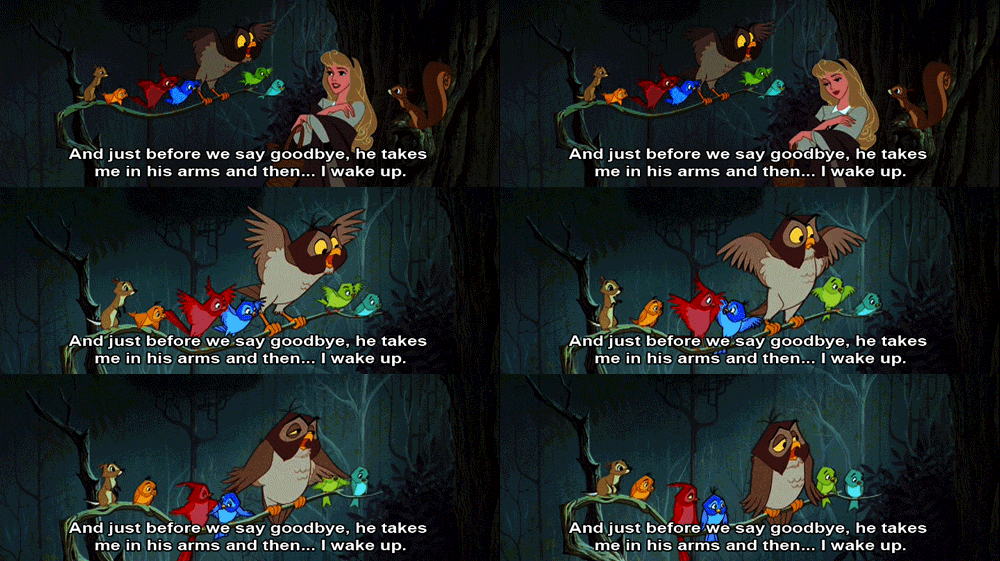
Sleeping Beauty - Maladaptive Daydreaming
- An extensive fantasy activity that replaces human interaction and/or interferes with academic, interpersonal, or vocational functioning.
- Daydreaming excessively in a way that is often compared to an addiction.
- This excessive daydreaming often begins in childhood.
- Books, movies, music, video games, and other media may be a daydreaming trigger.
- The daydreaming itself is often detailed and elaborate, sometimes compared to a movie or novel
- Repetitive movements while daydreaming are common (but not always present in sufferers) — pacing, rocking, spinning, shaking something in their hand, etc.
- They may sometimes talk, laugh, cry, gesture, or make facial expressions as they daydream. People suffering from this know the difference between daydreaming and reality, and do not confuse the two; this makes them distinctly different from psychotics or schizophrenics.
- Some people will lie in bed for hours daydreaming, and may either have difficulty going to sleep because of this, or have difficulty getting out of bed once awake. They may also neglect basic functions such as regular meals, showering, and other daily activities because of their daydreaming.
Ariel - Disposophobia
- They hold onto a large number of items that most people would consider useless or worthless
- Their home is cluttered to the point where many parts are inaccessible and can no longer be used for intended purpose
- Get into a lot of arguments with family members regarding the clutter
- Strong urges to save items and/or distress associated with discarding

Belle - Schizoid Personality Disorder (SPD)
- People with SPD are often aloof, cold and indifferent, which causes interpersonal difficulty. Most individuals diagnosed with SPD have trouble establishing personal relationships or expressing their feelings meaningfully.
- They may remain passive in the face of unfavorable situations
- When the individual's personal space is violated, they feel suffocated and feel the need to free themselves and be independent.
- It is possible for schizoid individuals to form relationships with others based on intellectual, physical, familial, occupational, or recreational activities as long as these modes of relating do not require or force the need for emotional intimacy, which the affected individual will reject.
- schizoid individuals prefer to make relationships on their own terms and not in terms of the impulses of other people. Failing to attain that, they prefer isolation
- Consistent preference for solitary activities
- Indifference to social norms and conventions.
- Preoccupation with fantasy and introspection

Jasmine - Oppositional Defiant Disorder (ODD)
- Includes at least four symptoms from any of these categories — angry and irritable mood; argumentative and defiant behavior; or vindictiveness
- Occurs with at least one individual who is not a sibling
- Causes significant problems at work, school or home
- Occurs on its own, rather than as part of the course of another mental health problem, such as a substance use disorder, depression or bipolar disorder
- Often loses temper
- Is often touchy or easily annoyed by others
- Is often angry and resentful
- Often argues with adults or people in authority
- Often actively defies or refuses to comply with adults' requests or rules
- Often deliberately annoys people
- Is often spiteful or vindictive
- Has shown spiteful or vindictive behavior at least twice in the past six months
- Blatant hostility towards others
- Being unwilling to compromise or negotiate
- Frequent frustration
- Difficulty concentrating
- Failure to "think before speaking or acting"
- Difficulty making friends
- Loss of self-esteem
- Persistent negativity
- Consistent feelings of annoyance

Pocahontas - Depression
- Feelings of helplessness and hopelessness. A bleak outlook—nothing will ever get better and there's nothing you can do to improve your situation.
- Loss of interest in daily activities. No interest in former hobbies, pastimes, social activities, or sex. You've lost your ability to feel joy and pleasure.
- Anger or irritability. Feeling agitated, restless, or even violent. Your tolerance level is low, your temper short, and everything and everyone gets on your nerves.
- Loss of energy. Feeling fatigued, sluggish, and physically drained. Your whole body may feel heavy, and even small tasks are exhausting or take longer to complete.
- Self-loathing. Strong feelings of worthlessness or guilt. You harshly criticize yourself for perceived faults and mistakes.
- Reckless behavior. You engage in escapist behavior such as substance abuse, compulsive gambling, reckless driving, or dangerous sports.
- Concentration problems. Trouble focusing, making decisions, or remembering things.
- Withdrawing from family members or people around you
- Can be brought about by trauma or loss

Mulan - Atelophobia
- Feelings of unreality or of being detached from oneself
- Fear of failing
- Pessimistic view on the outcome of situations before it happens
- Low self-esteem
- Extreme disappointment if one fails at something
- Responding unrealistically to a situation
- Depression
- Constant worrying about upcoming activities
- An overbearing amount of fear
- Unhealthy excessive emotions, such as anger, sadness, jealousy and hurt
- The desire to abruptly leave the situation
- Accelerated heart rate
- Trembling or shaking
- Increased muscle tension
- Constant restlessness
- Nervous mannerisms

Tiana - Workaholism
- Preoccupation with work; constant thoughts or even discussions about work issues at inappropriate times
- Withdrawal from social activities
- Loss of interest in hobbies or other enjoyable activities
- Working despite a need for sleep or even food
- Working when extremely tired or even when ill
- Loss of ability to relax
- Inability to trust colleagues or subordinates to do work that they can perform on your behalf
- Workaholics see work as a way to distance themselves from unwanted feelings and relationships.
- Workaholics believe that work is more important than anything else in their lives, including family and friends.
- Workaholics get excitement from meeting impossible demands
- Hard workers can take breaks from work while workaholics can't. They think about work regardless of what they're doing or who they're with.
- Workaholics are intense, energetic, competitive and driven
- Workaholics have self-doubts
- Workaholics prefer work to leisure
- Workaholics work anytime, anywhere
- Workaholics blur the line between business and pleasure. As a consequence, it's not uncommon for workaholics to have major health problems including stress-induced illnesses, chronic fatigue and increased anxiety levels

Rapunzel - Bipolar Disorder
- Difficulty concentrating, remembering, and making decisions
- Fatigue, decreased energy, being "slowed down"
- Feelings of guilt, worthlessness, helplessness
- Feelings of hopelessness, pessimism
- Insomnia, early-morning awakening, or oversleeping
- Persistently sad, anxious, or "empty" moods
- Restlessness, irritability
- Disconnected and very fast (racing) thoughts
- Grandiose beliefs
- Inappropriate elation or euphoria
- Inappropriate irritability
- Inappropriate social behavior
- Increased talking speed or volume
- Markedly increased energy
- Poor judgment
- A decreased need for sleep due to high energy
- Extreme focus on projects at work or at home
- Exuberant and elated mood
- Increased confidence
- Increased creativity and productivity
- Reckless behaviors
- Risky pleasure-seeking behaviors
- Mood swings

Anna -Attention Deficit Hyperactivity Disorder (ADHD, ADD)
- Be easily distracted, miss details, forget things, and frequently switch from one activity to another
- Become bored with a task after only a few minutes, unless they are doing something enjoyable
- Not seem to listen when spoken to
- Daydream, become easily confused, and move slowly
- Have difficulty processing information as quickly and accurately as others
- Struggle to follow instructions.
- Fidget and squirm in their seats
- Talk nonstop
- Dash around, touching or playing with anything and everything in sight
- Have trouble sitting still during dinner, school, and story time
- Be constantly in motion
- Have difficulty doing quiet tasks or activities.
- Be very impatient
- Blurt out inappropriate comments, show their emotions without restraint, and act without regard for consequences
- Have difficulty waiting for things they want or waiting their turns in games
- Often interrupt conversations or others' activities.

Elsa - Avoidant Personality Disorder (AvPD)
- Hypersensitivity to rejection/criticism
- Self-imposed social isolation
- Extreme shyness or anxiety in social situations, though the person feels a strong desire for close relationships
- Avoids physical contact because it has been associated with an unpleasant or painful stimulus
- Feelings of inadequacy
- Severe low self-esteem
- Self-loathing
- Mistrust of others
- Emotional distancing related to intimacy
- Highly self-conscious
- Self-critical about their problems relating to others
- Problems in occupational functioning
- Lonely self-perception, although others may find the relationship with them meaningful
- Feeling inferior to others
- In some extreme cases, agoraphobia
- Uses fantasy as a form of escapism to interrupt painful thoughts
- Persistent and pervasive feelings of tension and apprehension
- Restrictions in lifestyle because of need to have physical security

Disney Princesses That Have a Psychological Disorder
Source: https://rachelbethhines.tumblr.com/post/139950019951/disney-princess-and-mental-disorders
0 Response to "Disney Princesses That Have a Psychological Disorder"
Post a Comment